Blog

5 Reasons to Test Drive the 2025 Mazda3

2025 Mazda3 Sedan | Vancouver, WA

The Mazda3 is a fun and elegant compact car that has remained a top choice for efficient daily transportation for decades. Available in both sedan and hatchback configurations, the 2025 Mazda3 offers a compelling case for drivers looking for quality and driving enjoyment in an affordable package. Below are five reasons why taking the Madza3 for a test drive is worth your time.

Here’s Why You Should Test Drive the 2025 Mazda3 Today

1. Refined Driving Dynamics

Mazda has mastered the art of driving dynamics, and no where is this more evident than in the Mazda3. The G-Vectoring Control Plus system enhances cornering stability and steering responsiveness by subtly adjusting engine torque and brake force. The car's suspension is tuned for both comfort and control, giving drivers a reassuring feel of the road without being harsh.

2. Choice of Powertrains

Three engine options cater to a range of performance preferences. The standard 155-hp 2.0L four-cylinder is perfect for daily commuting, as is the optional 191-hp 2.5L four-cylinder that has an EPA-estimated fuel economy of 37 mpg on the highway. An available turbocharged version of the 2.5L engine provides power that rivals entry-level luxury cars, with 250 hp and 320 lb-ft of torque.

Drivers have their choice between front-wheel or all-wheel drive and a 6-speed manual or 6-speed automatic transmission in hatchback models, while sedan models only come with the 6-speed automatic and all-wheel drive.

3. Upscale Interior

The Mazda3 has an extremely high interior quality, with soft-touch surfaces and minimalist design cues that contribute to a modern, driver-focused layout. Higher trims feature leather-trimmed heated front seats with 8-way power adjustments and 2-position memory. Acoustic windshield glass and enhanced insulation create a calm, quiet, and peaceful driving environment.

4. Comprehensive Safety

All Mazda3 models come standard with the i-Activsense safety suite that includes intelligent features such as Adaptive Cruise Control, Lane Departure Warning with Lane Keep Assist, and Blind Spot Monitoring with Rear Cross-Traffic Alert. The 2025 model has received a 5-star safety rating from the National Highway Traffic Safety Administration (NHTSA), and has won a 2025 IIHS Top Safety Pick+ award.

5. Strong Standard Tech

Amazon Alexa now comes embedded into all Mazda3 infotainment systems, except for the base model. In Turbo models, a 10.3-inch display is standard, while lower trims receive an 8.8-inch display. Apple CarPlay and Android Auto are standard across the board, while a 12-speaker Bose audio system is standard equipment in higher trims.

The Mazda3 is a well-rounded compact car that delivers strong performance, advanced safety features, and premium interior quality, all while maintaining competitive pricing. This is a car that you're going to want to experience for yourself. Come down to Alan Webb Mazda in Vancouver, WA to get started on your test drive.

Recommended Posts

car brakes

Why Regular Chevrolet Brake Service Matters for Your Vehicle

Brakes have a fairly simple job, but t here's a lot of engineering involved in making it happen. Regular Chevrolet brake service helps keep those components doing their jobs properly. From a Silverado hauling equipment to an Equinox handling the family commute, every Chevy eventually needs brake maintenance. Knowing what to watch for can help Brooklyn, Connecticut drivers address normal wear before it becomes a larger repair. Why Bother Servicing Brakes Before There's a Problem? Brakes don't usually wear out all at once. Brake pads gradually lose material through normal use, fluid ages, and rotors can develop wear over thousands of miles. The process can be slow enough to adapt to those changes without noticing. A brake inspection gives technicians an opportunity to examine components such as the pads, rotors, calipers, lines, and fluid before you're relying on a dashboard warning or an unpleasant grinding sound to tell you something needs attention. Keeping up with Chevrolet maintenance can also help prevent worn components from damaging other parts of the braking system. Replacing brake pads at the appropriate time is considerably simpler than replacing pads and damaged rotors later. How Often Should the Brakes Be Checked? There isn't a universal mileage interval for every vehicle and driver. Someone spending most of the week cruising steadily on the highway won't necessarily wear brakes at the same rate as a driver navigating constant stop-and-go traffic. Driving conditions also affect brakes. Frequent short trips, heavy loads, towing, and regular travel through hilly areas can increase demands on the braking system. Your Chevrolet owner's manual is the right source for model-specific maintenance guidanc e. Our Chevrolet service technicians can also inspect your current brake condition and recommend future service based on the vehicle, mileage, and how you use it. What Do Bad Brakes Sound Like? Squealing or grinding while braking deserves attention. Other warning signs can include a brake pedal that feels unusually soft or spongy, vibration through the pedal or steering wheel, pulling while braking, or stopping distances that seem longer than they used to. A brake warning light is another signal not to postpone an inspection. Our Chevrolet service department can inspect the system and identify what's causing the change instead of relying on guesswork. Give Your Chevy's Brakes the Attention They Earn Your Chevrolet can have an impressive engine, comfortable cabin, and plenty of technology, but the ability to stop predictably remains one of its most important functions. If your brakes are making noise, the pedal feels different, or you simply can't remember the last time they were inspected, visit the service team at Vachon Chevrolet in Brooklyn, CT. Explore our Chevrolet service options and current service specials, then schedule your brake service online at a time that works for you. Your brakes do a hard job every day. It's worth making sure they're ready for the next stop.

2026 Mazda CX-5

The 2026 Mazda SUV Lineup: Start with What You Need

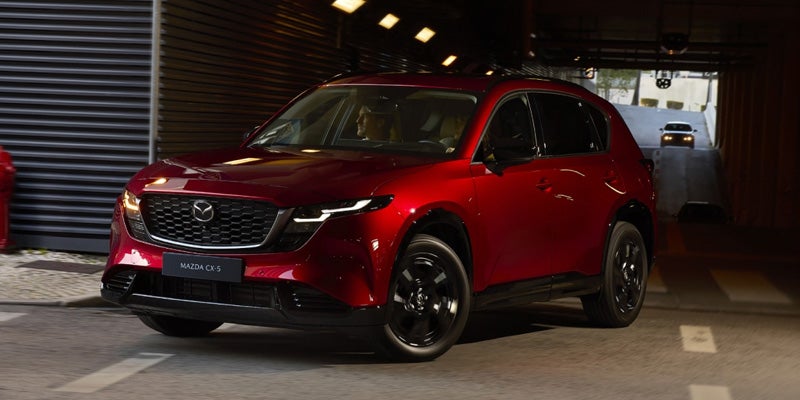
Mazda's 2026 SUV lineup covers a surprisingly wide range of ground. The CX-30 handles the compact end, CX-50 offers a more adventurous direction, and the CX-70 and CX-90 bring considerably more power, space, and towing capability. Hybrid and plug-in hybrid choices widen the field further. For shoppers around Vancouver, Washington, the easiest way to narrow the Mazda SUV inventory isn't to start with trim levels. Start with size, passenger needs, efficiency, and what you expect the vehicle to do. CX-30: The Small One with a Useful Specification The 2026 Mazda CX-30 makes sense for drivers who don't need a large SUV but still want the seating position and flexibility of a crossover. Its standard 2.5L 4-cylinder produces 186 hp and 186 lbs. ft. of torque, with an EPA-estimated 27 mpg combined. Those figures suit the CX-30's role nicely: manageable dimensions for traffic and parking without reducing it to something that feels out of place on the highway. The CX-30 also earned a 2026 IIHS TOP SAFETY PICK+ award. If your priorities are compact dimensions, straightforward gasoline power, and a strong safety credential, this is the logical starting point. CX-5: The Conventional All-Rounder The 2026 Mazda CX-5 sits in familiar territory: practical enough for family use but not unnecessarily large. Its 2.5L 4-cylinder produces 187 hp and 186 lbs. ft. of torque and works with a 6-speed automatic transmission. Standard i -ACTIV AWD® gives every CX-5 AWD capability, while EPA-estimated combined fuel economy is 26 mpg. It also earned a 2026 IIHS TOP SAFETY PICK+ award. The CX-5 is the Mazda to consider when you don't have an unusual requirement. You need useful space, AWD, sensible fuel economy, and enough power for ordinary driving. Sometimes the middle of the range is exactly where you want to be. CX-50: Similar Size, Different Priorities The 2026 CX-50 takes Mazda's compact SUV formula in a more outdoors-oriented direction. Its standard 2.5L 4-cylinder produces 187 hp and 185 lbs. ft. of torque, with an EPA-estimated 26 mpg combined. Like the CX-30 and CX-5, the 2026 CX-50 earned IIHS TOP SAFETY PICK+ recognition. The more interesting alternative is the CX-50 Hybrid. Its hybrid powertrain produces 219 hp while returning an EPA-estimated 38 mpg combined. That gives shoppers a clear choice. The conventional CX-50 keeps things straightforward, while the CX-50 Hybrid makes more sense for drivers who put considerably more weight on fuel economy. CX-70: Two Rows and Considerably More Muscle The CX-70 is for someone who wants a larger SUV but has no use for a third row. The standard 3.3L Turbocharged Inline-6 produces 280 hp and 332 lbs. ft. of torque. Turbo S models increase output to as much as 340 hp and 369 lbs. ft. of torque with premium fuel. Properly equipped, towing capacity reaches 5,000 lbs. Then there's the CX-70 PHEV, which offers a different approach to the same two-row format. It achieves an EPA-estimated 61 MPGe combined, making it the highest combined MPGe figure among the Mazda SUVs covered here. Both the standard CX-70 and PHEV have earned 2026 IIHS TOP SAFETY PICK+ recognition. CX-90: When You Need the Third Row The CX-90 answers the obvious question left by the CX-70: what if you need more seats? Gasoline-powered 2026 CX-90 configurations can accommodate up to 8 passengers. The CX-90 PHEV seats 7. The gasoline lineup uses a 3.3L Turbocharged inline-6 producing up to 280 hp and 332 lbs. ft. of torque, while Turbo S models reach up to 340 hp and 369 lbs. ft. of torque with premium fuel. Maximum towing capacity is 5,000 lbs. when properly equipped. The PHEV produces 323 hp in total system output and achieves an EPA-estimated 56 MPGe combined, along with an EPA-estimated 26 miles of electric driving range. For larger families, that combination of three-row seating and available electrification makes the CX-90 the natural place to finish the Mazda model comparison. There’s a Mazda for Each End of the Equation Visit Alan Webb Mazda in Vancouver to browse the current Mazda SUV inventory and compare the CX-30, CX-5, CX-50, CX-70, and CX-90 in person. Once you've narrowed the lineup to the size and powertrain that suit you, schedule your Mazda SUV test drive online. Multiple SUVs are much easier to compare once you know what you need the winner to do.

2026 Mazda3 Hatchback

2026 Mazda3 Hatchback Capacity: Compact Outside, Clever Inside

The 2026 Mazda3 Hatchback paves its own road. For drivers around Vancouver, WA, the Mazda3 Hatchback capacity provides a useful alternative to moving up to a crossover purely for additional luggage room. It seats 5, offers 20.1 cu. ft. of cargo volume behind the rear seats, and remains less than 15 feet long. If you're browsing our new Mazda inventory, it's worth looking beyond the Mazda3 's compact footprint. Start With the Numbers The 2026 Mazda3 Hatchback measures 175.6 inches long, 70.7 inches wide, and 56.7 inches tall, with a 107.3-inch wheelbase. Those dimensions make it easy to position in parking spaces and maneuver through busy streets without creating an overly cramped cabin. Front passengers have 42.3 inches of legroom and 37.6 inches of headroom. In the back, there are 35.1 inches of legroom and 37.2 inches of headroom. Total passenger volume is 92.8 cu. ft., with seating for 5. It's a sensible use of a relatively small exterior. For Vancouver drivers who spend most of their week commuting but still need room for friends or family, the Mazda3 doesn't require you to drive a larger vehicle every day simply to have usable rear seating. The Hatchback Earns Its Keep When You Open the Rear Cargo space is where the body style begins to make a strong argument for itself. The Mazda3 Hatchback provides 20.1 cu. ft. of cargo volume behind the rear seats. That's useful space for grocery runs, carry-on luggage, backpacks, sports equipment, and the other items that accumulate during a normal week. The liftgate also creates a larger opening than a conventional sedan trunk, which can make awkwardly shaped items easier to load. When 20.1 cu. ft. isn't enough, a 60/40 split fold-down rear seatback lets you extend the cargo area into the passenger compartment. Fold one section and you can carry longer items while retaining a rear seat. Fold more when cargo takes priority. Shoppers deciding between body styles can compare our Mazda3 Hatchback inventory with available Mazda3 Sedan models to see which layout works better for you. Small Dimensions Are Useful in the Real World At 175.6 inches long, the Mazda3 Hatchback occupies considerably less road and parking space than many crossovers. That can be useful when navigating downtown areas, squeezing into a garage, or simply trying to find a convenient parking spot. Yet you still have the wide- opening liftgate and folding rear seats when the weekend requires more equipment than the daily commute. Depending on trim, buyers can choose FWD or available i -ACTIV AWD®. For drivers dealing with Vancouver's rain and changing Pacific Northwest road conditions, available AWD adds another useful option without requiring the move to an SUV. There Is Plenty of Performance to Go with the Practicality Most 2026 Mazda3 Hatchback models use a 2.5L SKYACTIV®-G 4-cylinder engine producing up to 186 hp and 186 lbs. ft. of torque. Turbo models bring considerably more performance from a 2.5L Dynamic Pressure Turbo engine. With 93-octane premium fuel, output reaches up to 250 hp and 320 lbs. ft. of torque. That gives Mazda3 shoppers a fairly unusual choice in this segment: prioritize straightforward everyday performance or choose the turbocharged powertrain for considerably more punch. Explore our available Mazda3 models to compare engines, drivetrains, and trim features before deciding which combination suits your driving. Safety and Technology Haven't Been Overlooked The 2026 Mazda3 Hatchback earned a 2026 IIHS TOP SAFETY PICK+, an important distinction for a vehicle likely to spend its life handling commuting, errands, and family transportation. Mazda's i-Activsense ® driver-assistance technologies include Blind Spot Monitoring, Rear Cross Traffic Alert, Lane Departure Warning, Lane Keep Assist, and Mazda Radar Cruise Control with Stop & Go, with equipment varying by trim. Available technology includes a 10.25-inch center display, wireless Apple CarPlay® and Android Auto™ integration, wireless phone charging, and a 12-speaker Bose® premium audio system on select models. Bring Your Everyday Gear and Try It at Alan Webb Mazda Cargo figures are useful, but the easiest way to judge Mazda3 Hatchback capacity is to open the liftgate and see the space yourself. With 20.1 cu. ft. behind the rear seats, a 60/40 split-folding seatback, seating for 5, and an exterior length of only 175.6 inches, the Mazda3 Hatchback packs useful versatility into a genuinely compact footprint. Browse our new Mazda inventory, compare Mazda3 trims online, or visit us in Vancouver, WA. When you've found a Mazda3 Hatchback that interests you, schedule a test drive online and see how its size, cargo space, and performance fit into your daily life.